

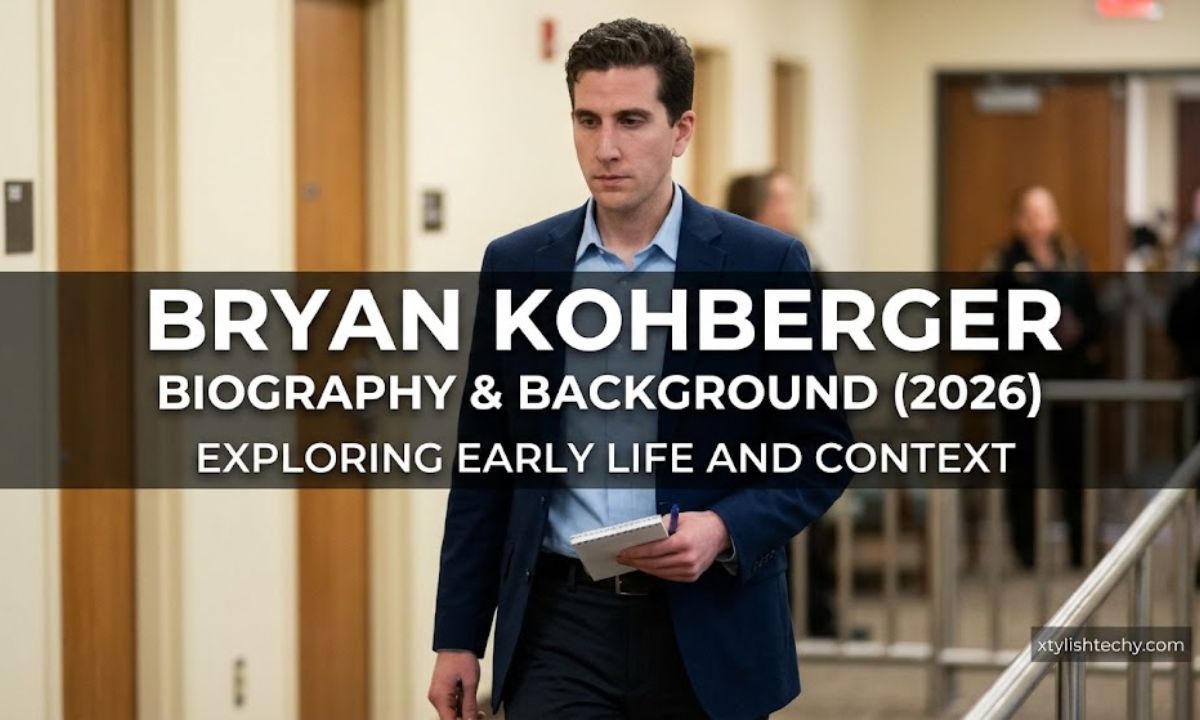
Few criminal cases in recent American history have produced as much speculation as the 2022 killings in Moscow, Idaho. Bryan Kohberger, the man convicted of those crimes, has been the subject of countless articles, videos, and social media threads, and many of them mix verified facts with rumor. This article separates what is documented from what is not, using court records and mainstream reporting as the basis. Anyone researching Bryan Kohberger should treat unsourced claims with caution, because the case attracted more amateur theorizing than almost any other.
This article reflects what was publicly known as of its writing. Court filings and official corrections-department records remain the most reliable sources for any later changes.
Quick Facts About Bryan Kohberger
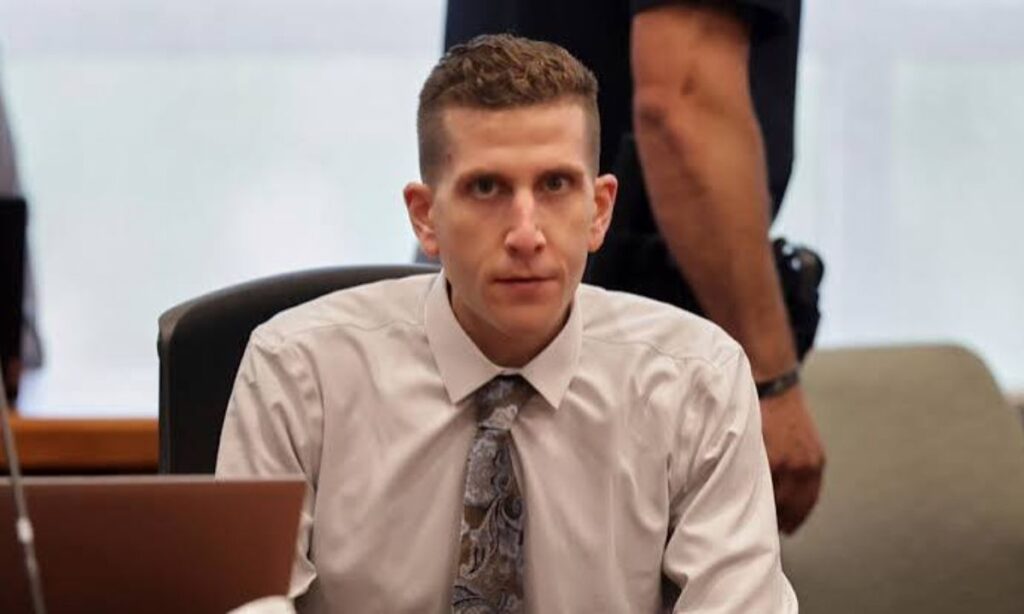
- Full name: Bryan Christopher Kohberger
- Born: November 21, 1994, in Pennsylvania
- Age: 31 as of November 2026
- Hometown: Albrightsville, in Pennsylvania’s Pocono region
- Education: Associate degree in psychology (Northampton Community College), bachelor’s and master’s degrees (DeSales University), and a doctoral program in criminology at Washington State University that he did not complete
- Arrested: December 30, 2022, in Pennsylvania
- Charges: Four counts of first-degree murder and one count of felony burglary
- Outcome: Guilty pleas in July 2025 and a sentence of consecutive life terms without the possibility of parole
These basics are consistent across court documents and major news organizations. Everything beyond them requires more careful sourcing, which the sections below address.
Early Life and Family Background
Bryan Kohberger grew up in a rural area of Monroe County, Pennsylvania, in the Pocono Mountains. He attended Pocono Mountain West High School, where he graduated in 2013. Former classmates interviewed by reporters after his arrest gave mixed and sometimes contradictory recollections. Some described him as quiet and socially awkward, while others remembered a period of bullying. Such recollections arrive years after the fact, and memory colored by notoriety is unreliable. They should be read as impressions, not established biography.
Little else about his childhood has been confirmed through official records. Most of what circulates online comes from interviews with acquaintances and from articles that repeat one another without independent verification. The better course is to rely on documents entered in court and on reporting that names its sources.
What Is Known About His Parents and Siblings?
Bryan Kohberger’s parents are Michael and Maryann Kohberger, and he has two older sisters, Melissa and Amanda. His parents’ home in Albrightsville is where law enforcement arrested him in late December 2022. His family has largely avoided public comment, though relatives appeared in court during the proceedings and his father accompanied him on a cross-country drive home from Washington State shortly before the arrest.
The family are private citizens who were not accused of any wrongdoing. Speculation about their role, their beliefs, or their private lives has no factual basis. Responsible coverage of Bryan Kohberger’s family stays limited to what has been publicly documented and avoids assigning them any responsibility.
Education and Interest in Criminal Justice
Bryan Kohberger’s academic path began at Northampton Community College, where he completed an associate degree in psychology in 2018. He then enrolled at DeSales University in Pennsylvania and earned a bachelor’s degree in psychology in 2020. He stayed at DeSales for a master’s degree in criminal justice, completed in 2022.
Faculty and former classmates at those institutions have been quoted describing a student interested in criminology, forensic topics, and criminal behavior. An interest in crime as an academic subject is common among criminal justice students and is not evidence of anything on its own. What matters for the legal record is what prosecutors proved or what the defendant admitted, not what he studied.
Academic Research and Teaching
In the summer of 2022, Bryan Kohberger moved to Pullman, Washington, to begin a doctoral program in criminology and criminal justice at Washington State University. He worked as a teaching assistant, and the university later confirmed this role. Students and faculty described him as someone who attended classes and carried out his duties, though a few students reported unease about his behavior in the classroom.
One area of public attention was a survey he had circulated, reportedly during his graduate studies, asking people about their experiences and decisions when committing crimes. Commentators later cited it as a sign of preoccupation, but surveys of this kind are a normal research method in criminology. The university removed him from the program after his arrest, and he did not finish his doctorate. The suggestion that his studies were a direct preparation for the crimes was argued in media commentary, not proven as a fact in court.
The November 2022 Idaho Case
In the early morning hours of November 13, 2022, four University of Idaho students were killed at a rental house on King Road in Moscow, Idaho. The victims were Kaylee Goncalves, Madison Mogen, Xana Kernodle, and Ethan Chapin. They were found later that day after a call to emergency services from the house, and the discovery shocked the small college town.
Two other roommates were inside the house that night and survived. For weeks, no suspect was publicly identified. Police asked the public for information, and a large investigation drew in local, state, and federal agencies. The community was frightened, the university offered counseling, and relatives of the victims demanded answers. In that vacuum, online speculation grew rapidly, and some of it wrongly accused innocent people.
Why the Case Drew So Much Attention
Several factors explain the scale of attention. The victims were young college students, the crime was violent, and a small, close-knit town was suddenly at the center of national coverage. The case also had a long gap between the crime and the arrest, during which amateur investigators filled the silence with theories. Social media platforms rewarded dramatic claims, and true-crime content creators produced a steady flow of videos. Some people who were wrongly named online sued for defamation, which shows how real the harm from misinformation became. Anyone reading about Bryan Kohberger should remember that interest in a story does not make every claim about it accurate.
Arrest, Charges, and Legal Status
Police arrested Bryan Kohberger on December 30, 2022, at his parents’ home in Pennsylvania. He waived extradition and was transferred to Idaho in January 2023. A grand jury later indicted him on four counts of first-degree murder and one count of burglary. At an arraignment in 2023, the court entered not-guilty pleas on his behalf after he declined to enter one himself.
The prosecution initially said it would seek the death penalty. The case moved slowly through pretrial motions over a long period, including disputes about evidence, genetic genealogy, a possible alibi, and whether proceedings should be moved from Latah County. A trial date was set for 2025.
Before the trial began, Bryan Kohberger reached a plea agreement. In July 2025, he pleaded guilty to all counts in exchange for the prosecution taking the death penalty off the table. A judge sentenced him later that month to four consecutive life terms without the possibility of parole for the murders, plus an additional term for burglary. As part of the agreement, he waived most rights to appeal. Because he pleaded guilty, there was no full jury trial, and some of the evidence the prosecution had prepared was never tested before a jury. For current custody details or any later filings, official Idaho court and corrections records are the authoritative source.
Evidence and Courtroom Claims
Court filings and prosecutors’ statements described several categories of evidence: DNA found on a knife sheath at the scene that was linked to him through genetic genealogy, surveillance video showing a white sedan near the home, and phone-location data. The defense challenged parts of this, including the genetic genealogy method, and raised questions about the reliability of some digital evidence.
It is important to distinguish a claim made in court from a proven fact. Before a verdict or plea, assertions by either side are allegations or arguments. After the guilty plea, the conviction is established, but many details prosecutors described were never tested at trial. The motive has also not been established through any trial testimony. Careful readers of material about Bryan Kohberger should note which statements are findings and which are only claims.
Questions About Dylan Mortensen and the House
Dylan Mortensen was one of the two surviving roommates in the house on King Road. According to the probable cause affidavit, she was awake in the early hours of November 13 and said she saw a masked figure in black clothing with bushy eyebrows walking through the home. She reportedly stayed in her room, frightened, and did not call emergency services until the next morning.
Her account became central to public discussion because she was the closest eyewitness to the intruder. It also drew unfair criticism online, as strangers second-guessed how a person in shock should have reacted. Trauma responses vary, and judging her actions from a distance is neither fair nor productive.
What Does “Why Did He Leave Dylan?” Mean?
This phrase appears frequently in search queries, and it deserves a direct answer. It is a confusing question because it assumes facts not in evidence. There is no verified reporting that Bryan Kohberger had a relationship, friendship, or prior acquaintance with Dylan Mortensen, and the phrasing “leave Dylan” implies a connection that has not been documented. Investigators and prosecutors never established that he knew any of the people in the house.
Why he did not harm the two surviving roommates has not been established in a way the public can verify, and any answer would be speculation. Court records do not provide a confirmed explanation. The most honest answer is that the reason is unknown, and that anyone offering a confident explanation is guessing. Readers should be skeptical of videos or posts claiming to know what he intended.
Publicly Reported Relationships, Religion, and Identity
Searches for Bryan Kohberger often include questions about girlfriends, marriage, religion, and personal identity. Here, the public record is thin. Court documents and mainstream reporting have not documented any confirmed romantic partner, and claims about relationships in forums or short videos are generally unsourced. Likewise, no reliable public source establishes his religious beliefs in a way that explains anything about the case, and speculation about his identity or personal life is not supported by documents.
Absence of information is not a hint that something is being hidden. It usually means the topic was not relevant to the legal proceedings or was never reported on reliably. Treating the missing details as a puzzle to be solved leads people toward invention.
Privacy and Responsible Reporting
A convicted person’s alleged crimes are a matter of public record, but that does not make every aspect of his life, or the lives of his relatives and former acquaintances, fair game. Responsible reporting about Bryan Kohberger distinguishes between what the court record shows and personal details with no bearing on the case. It also protects people who are only connected to him by association, such as relatives, classmates, and roommates. Naming or accusing uninvolved people has caused real harm in this case and should be avoided.
Social Media and Public Information
After his arrest, reporters and online investigators examined whatever social media presence he had. Accounts attributed to him on platforms such as Instagram and Facebook were reviewed, and court records discussed online activity as part of the investigation. Some accounts and posts were quickly misattributed or exaggerated, and fake profiles were circulated as though they were real.
Several practical lessons follow. Screenshots can be fabricated or taken out of context. Accounts with similar names can belong to unrelated people. Claims that an account “proves” something about motive or character are rarely supported by evidence. For reliable information, readers should favor documents filed in court, statements from prosecutors and the court, and reports from established news organizations over anonymous social media posts. Bryan Kohberger’s online footprint, as described in verified reporting, was relatively limited, and much of what circulates beyond that is unreliable.
Net Worth, Income, and Financial Information
People often search for Bryan Kohberger’s net worth, but there is no reliable public figure. He was a graduate student and teaching assistant, which typically means a modest stipend and student debt, not significant wealth. During the legal process, he was represented by public defenders, which indicates that he qualified for court-appointed counsel. Beyond that, no verified accounting of his income, savings, or assets has been published.
Why Exact Estimates Are Unreliable
Websites that publish a specific net worth number for a person like this are usually generating guesses, often scraped from other low-quality pages. Without tax records, financial disclosures, or court filings, any precise figure is invented. A better framing is that his financial profile appears to be that of a student and graduate employee, and that no credible source offers more. Readers who see a confident dollar amount should ask where it came from.
What Is Confirmed, Reported, and Unknown?
Separating the layers of information is the most useful habit when reading about this case.
Confirmed: He was born in 1994, studied psychology and criminal justice, and was a doctoral student at Washington State University. He was arrested in December 2022, pleaded guilty in 2025 to the murders of four University of Idaho students and to burglary, and received consecutive life sentences without parole.
Reported but variably sourced: Accounts from former classmates and acquaintances about his personality, descriptions of his behavior in school, and details of evidence described in affidavits and prosecutor statements. These are useful context but should be read with attention to who is speaking and in what setting.
Unknown or unproven: His motive, why the two surviving roommates were not harmed, whether he had any prior connection to the victims, and the inner reasoning behind his actions. No court proceeding established these through tested testimony, and credible reporting does not offer definitive answers.
Why Bryan Kohberger’s Biography Is Frequently Misread
Biographies of people involved in notorious crimes are often distorted by hindsight. Once someone is known as a perpetrator, every earlier detail seems to carry meaning: a quiet personality, an interest in crime studies, an odd comment from a classmate. This is a cognitive trap. Many people share those traits without harming anyone, and ordinary details gain sinister significance only after the fact.
The case also attracted a culture of amateur detective work. Without official information in the weeks after the killings, large online communities generated theories, some of which were pursued with great certainty and later proved wrong. Wrongly accused individuals suffered threats and reputational damage. Search engines and recommendation algorithms then amplified popular speculation. A plea instead of a trial also meant that many assertions were never cross-examined, leaving gaps that rumor continues to fill.
How to Read Case Information Carefully
A few habits help.
- Check the source type. Court documents, official statements, and established news outlets are stronger than anonymous posts.
- Notice the verbs. “Alleged,” “reported,” and “found” carry different weight.
- Watch for hindsight. Ask whether a detail would have seemed meaningful before the crime.
- Be wary of certainty about motive. If no court finding exists, a confident explanation is opinion.
- Protect uninvolved people. Relatives, classmates, and survivors are not the story.
Applying these habits to anything written about Bryan Kohberger makes it easier to see the difference between documented history and internet folklore.
Frequently Asked Questions
How old is Bryan Kohberger?
He was born on November 21, 1994, so he is 31 as of early November 2026.
Where did Bryan Kohberger grow up?
He grew up in Albrightsville, in the Pocono Mountains region of Pennsylvania, and attended Pocono Mountain West High School.
What did Bryan Kohberger study?
He earned degrees in psychology and criminal justice in Pennsylvania and began a doctoral program in criminology at Washington State University in 2022.
What was he convicted of?
He pleaded guilty to four counts of first-degree murder and one count of burglary in connection with the deaths of Kaylee Goncalves, Madison Mogen, Xana Kernodle, and Ethan Chapin.
What is his sentence?
He received four consecutive life sentences without the possibility of parole, plus additional time for burglary, under a plea agreement that removed the death penalty.
Did he know the victims?
No public evidence established a prior relationship with any of them, and investigators did not publicly document one.
Why did he leave Dylan Mortensen alive?
That has not been established. Dylan Mortensen was a surviving roommate, and there is no verified information about the intruder’s reasons.
What is his net worth?
No credible figure exists. Published numbers are guesses, and his reported circumstances were those of a graduate student represented by public defenders.
Was there a full trial?
No. Because he pleaded guilty, the case concluded with a sentencing hearing instead of a jury trial.
Where can readers find reliable information?
Idaho court records, official statements from prosecutors and law enforcement, and established news organizations are the most dependable sources.
Final Takeaway
The documented story of Bryan Kohberger is shorter and less dramatic than the internet version. He was a graduate student with a background in psychology and criminal justice who was arrested in December 2022 and later pleaded guilty to the murders of four University of Idaho students. He is serving consecutive life sentences. Beyond that core, much of what circulates is rumor, hindsight, or invention, especially regarding motive, relationships, personal beliefs, and finances.
The most important lesson is to read carefully and to remember the people at the center of the tragedy: Kaylee Goncalves, Madison Mogen, Xana Kernodle, and Ethan Chapin, and the survivors and families who live with the consequences. When researching Bryan Kohberger or any similar case, favor verified records over viral claims, and be willing to say “unknown” where the evidence stops.